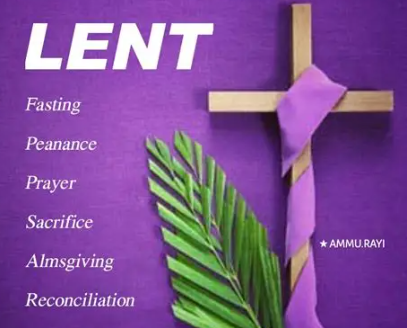
A complete guide to the most transformative season in the Christian calendar
Church Calendar | Spiritual Disciplines | Easter Preparation
Every year, as winter begins to loosen its grip and the first hints of spring creep into the air, millions of Christians around the world enter a season that is unlike any other on the calendar. They smear ash on their foreheads, give up coffee or social media or meat on Fridays, attend extra church services, and speak in hushed, reflective tones about what God is doing in them. Some do these things out of habit, inherited from parents and grandparents who did the same. Others do them with deep intentionality, having discovered in Lent a spiritual crucible that has changed them in ways they struggle to put into words.
But many Christians — especially those from evangelical or non-liturgical backgrounds — have only a vague sense of what Lent actually is. They know it has something to do with Easter. They know it involves giving something up. And they suspect, perhaps, that it carries a depth and richness they have never quite tapped into.
This article is for all of them. Whether you have observed Lent faithfully for decades or are encountering it for the very first time, the invitation of this season is the same: slow down, turn inward, and walk deliberately toward the cross. Let the forty days do their transforming work in you. Come to Easter changed. Let us begin at the beginning.
✝
Part One: What Is Lent?
The Meaning of the Word
The English word “Lent” derives from the Old English word lencten, which simply means “spring” — a reference to the lengthening days of the season in which it falls. But the theological substance of Lent reaches far deeper than its seasonal etymology. In Latin, the season is called Quadragesima, meaning “forty days,” and it is this number — forty — that carries the full weight of Lent’s meaning.
The Sacred Significance of Forty
The number forty appears with striking frequency throughout Scripture, always in the context of preparation, trial, and transformation. Noah and his family endured forty days and forty nights of rain before the flood receded and the earth was renewed. Moses spent forty years in the wilderness of Midian being shaped by God before the burning bush called him to his life’s work. The Israelites wandered forty years in the wilderness before entering the Promised Land — a generation-long journey of refinement, failure, repentance, and renewed faith.
Most significantly for Lent, Jesus Himself withdrew into the wilderness for forty days immediately following His baptism. There He fasted, prayed, and faced three powerful temptations from the devil. He emerged from those forty days ready to begin His public ministry, walking with clarity of purpose toward the events that would culminate in Jerusalem. Lent is the Church’s annual invitation to journey with Jesus into the wilderness — to fast and pray and face our own temptations, so that we might emerge on Easter morning renewed and ready.
“Then Jesus was led by the Spirit into the wilderness to be tempted by the devil. After fasting forty days and forty nights, he was hungry.” — Matthew 4:1-2
The History and Origins of Lent
Lent is among the oldest structured seasons in the Christian calendar, though its precise form has evolved significantly over the centuries. In the earliest centuries of the Church, new converts preparing for baptism on Easter Sunday — called catechumens — underwent an intensive period of instruction, fasting, and examination before receiving the sacrament. The entire congregation would often fast and pray alongside them in solidarity.
By the fourth century, this preparatory period had been formally established as forty days, in explicit imitation of Christ’s wilderness fast. The Council of Nicaea in 325 AD referenced Lent as an established practice. It became the most solemn and spiritually demanding season of the church year — a time not only of preparation for Easter but of repentance, self-examination, and renewed commitment to the baptismal life.
For most of Christian history, Lent was a season of austere fasting, abstinence from meat, extended prayer, and charitable giving. The Reformers of the sixteenth century were critical of what they saw as works-righteousness in Lenten practices, and as a result, many Protestant traditions moved away from observing it. However, there has been a significant and growing recovery of Lent across evangelical and non-liturgical churches in recent decades, as Christians seek the spiritual depth that the season offers.
Today, Lent is observed — in varying forms and with varying intensity — by Roman Catholics, Eastern Orthodox Christians, Anglicans, Lutherans, Methodists, Presbyterians, and a growing number of evangelical and charismatic Christians worldwide. It is one of the great convergence points of the universal Church.
When Does Lent Begin and End?
Lent begins on Ash Wednesday and concludes on Holy Saturday, the day before Easter Sunday. It spans forty days — not counting Sundays, which are considered “little Easters” and are technically outside the Lenten fast. The exact dates shift every year because Easter is a moveable feast, calculated as the first Sunday after the first full moon following the spring equinox in the Northern Hemisphere. Lent therefore falls somewhere between early February and mid-April, depending on the year.
The final week of Lent — Holy Week — runs from Palm Sunday through Holy Saturday and includes some of the most sacred days in the Christian calendar: Maundy Thursday (the Last Supper), Good Friday (the Crucifixion), and Holy Saturday (the silent vigil at the tomb).
| Key Dates at a Glance:
Ash Wednesday — The start of Lent and the day of ashes. Palm Sunday — Six days before Easter; Jesus’s triumphal entry into Jerusalem. Maundy Thursday — The Last Supper and institution of the Eucharist. Good Friday — The crucifixion of Jesus Christ. Holy Saturday — The day of waiting, silence, and vigil. Easter Sunday — The resurrection. The end of Lent. The greatest day in the Christian year. |
✝
Part Two: The Three Pillars of Lent
Lent is built on three ancient, interlocking spiritual disciplines that Jesus Himself references in the Sermon on the Mount in Matthew 6: fasting, prayer, and almsgiving (charitable giving). He does not say “if” you practice these things — He says “when,” assuming they are the natural rhythm of a disciple’s life. Lent provides a structured, communal season in which to engage all three with renewed intentionality.
The First Pillar: Fasting
Fasting is the practice most commonly associated with Lent, and it is the one most frequently misunderstood. In popular culture, “giving something up for Lent” has become something of a joke — people give up chocolate, Netflix, or carbohydrates with varying degrees of seriousness and success. But the tradition of Lenten fasting carries a theological weight that is worth recovering.
At its core, fasting is not about willpower, health goals, or spiritual achievement. It is about hunger. When you fast from food — or from anything that you have allowed to become a comfort, a distraction, or a substitute for God — you create an emptiness. And that emptiness is the point. The hunger you feel is meant to be redirected: every time your stomach growls, every time you reach for your phone and remember you are fasting from it, you are invited to turn that craving toward God. “I am hungry. And beneath this hunger for food is a deeper hunger — for You.”
Fasting is also an act of solidarity. Jesus fasted. The prophets fasted. The early church fasted together. When you fast during Lent, you join a practice that stretches back across two thousand years of Christian devotion. You are also, in a small way, identifying with the poor who do not have the luxury of choosing whether to eat.
“Is not this the kind of fasting I have chosen: to loose the chains of injustice and untie the cords of the yoke, to set the oppressed free and break every yoke?” — Isaiah 58:6
What can you fast from during Lent? The possibilities are many. Traditional Lenten fasting involves abstaining from meat on Fridays and sometimes observing a stricter fast on Ash Wednesday and Good Friday. But fasting can extend to any area of life where you are seeking to break a habit, reclaim time, or create space for God:
- Social media and digital entertainment
- Alcohol, sweets, or comfort foods
- Unnecessary spending or shopping
- News consumption or political commentary
- Television or streaming services
- Complaining, gossip, or negative self-talk
Whatever you fast from, the key question is: what will you do with the time, money, attention, or energy that is freed up? Fasting without prayer and intentional replacement is merely a diet. Fasting with prayer is transformation.
The Second Pillar: Prayer
If fasting creates the hunger, prayer fills it. Lent is an invitation to deepen, extend, and restructure your prayer life. In a season when the whole Church is leaning into the shadow of the cross, prayer takes on a particular quality — more honest, more urgent, more stripped of pretense.
Many Christians use Lent to establish new prayer habits that they carry beyond the season: rising earlier for morning prayer, observing the ancient practice of fixed-hour prayer (praying at set times throughout the day), or spending time each day in the Lectio Divina — a slow, meditative reading of Scripture in which you listen for what God is saying to you personally through the text.
The traditional Lenten prayer practice includes several elements that are worth exploring:
The Examen
The Daily Examen is a prayer practice developed by St. Ignatius of Loyola in the sixteenth century, though it draws on ancient roots. It involves a brief daily review of your day in God’s presence — typically five to ten minutes in the evening. You ask two questions: Where did I experience consolation today — moments of grace, love, gratitude, peace? And where did I experience desolation — moments of failure, sin, emptiness, distance from God? The Examen trains you to see God in the ordinary texture of your days, and it cultivates the habit of honest self-examination that Lent calls us to.
The Stations of the Cross
The Stations of the Cross is a devotional practice in which you meditate on fourteen (traditionally) moments in Jesus’s journey from His condemnation to His burial. Originally, pilgrims in Jerusalem would walk the actual route — the Via Dolorosa — stopping at each location to pray. Over time, this practice was brought indoors through artwork and prayer, making it available to Christians everywhere. Many churches offer guided Stations services on Friday evenings during Lent. Praying the Stations is one of the most powerful ways to enter imaginatively and devotionally into the suffering of Christ — to walk, step by step, with Jesus to the cross.
Lenten Devotionals and Scripture Reading
Many Christians observe Lent through a structured Scripture reading plan or daily devotional guide focused on themes of repentance, grace, and the passion narrative. Reading through the Gospel of Mark — the shortest and most urgent of the four Gospels — during Lent is a particularly powerful practice, as it moves with relentless momentum toward the cross. The Gospel of John’s extended passion narrative (chapters 13-19) is another profound companion for Holy Week.
The Third Pillar: Almsgiving
The third pillar of Lent is perhaps the least discussed but among the most scripturally grounded. Almsgiving — giving to the poor, the hungry, and the marginalized — is not optional charity in the biblical tradition. It is a form of worship. It is a concrete expression of the truth that we have received grace, and we are called to extend it.
During Lent, the money saved through fasting — from eating out less, from forgoing luxuries, from simplifying consumption — is traditionally given away. This connects the interior discipline of fasting to an exterior act of justice and love, completing the circuit. You deny yourself so that someone else may have enough. You make yourself a little poorer so that someone a great deal poorer may be a little richer.
Many churches and Christian organizations run specific Lenten giving campaigns — for food banks, for clean water projects, for refugee support, for anti-trafficking work. Giving in this structured, intentional way during Lent is not just financially generous. It is spiritually formative. It breaks the grip of materialism. It trains the heart to hold things loosely. It reminds you, forty days in a row, that you are not the center of the universe — and that the God who emptied Himself for you is asking you to empty yourself for others.
✝
Part Three: Ash Wednesday — The Day It All Begins
No day in the Christian calendar is quite like Ash Wednesday. It is, by design, jarring. It begins with a liturgical act that is meant to arrest you, to cut through the noise of ordinary life and force a confrontation with the deepest truths of your existence.
The practice is ancient and profoundly simple: a minister or priest marks your forehead with ash in the sign of the cross, and says the words: “Remember that you are dust, and to dust you shall return.” The words come from Genesis 3:19, God’s words to Adam after the fall. They are not comfortable words. They are not the kind of thing you want said to you at the beginning of a Tuesday. They are, in the most literal sense, a memento mori — a reminder of death.
And yet this is precisely why Ash Wednesday is so spiritually powerful. In a culture that is almost pathologically death-denying — that spends billions of dollars hiding wrinkles, reversing aging, and distracting us from our mortality — Ash Wednesday walks directly into the room and says: You will die. You are finite. You are not God. You need a Savior.
The ashes themselves come from burning the palm branches blessed on the previous year’s Palm Sunday — a beautiful liturgical symmetry. The palms that once waved in triumph, welcoming the King, become the ash that marks our mortality. The glory of one moment becomes the dust of the next. And out of the dust, resurrection comes.
For many Christians, receiving ashes is one of the most viscerally moving moments of the entire church year. There is something about the physical act — the mark on the skin, visible to others, announcing “I am a Christian, I am a sinner, I am mortal, and I belong to God” — that reaches past the intellect and touches something deep.
“Create in me a pure heart, O God, and renew a steadfast spirit within me. Do not cast me from your presence or take your Holy Spirit from me.” — Psalm 51:10-11
Ash Wednesday services typically include Scripture reading, a homily on repentance and mortality, the imposition of ashes, and often the Eucharist. Some churches also include a public confession of sin — a communal acknowledgment that we have fallen short and need grace. It is a sober, quiet, remarkably holy gathering that sets the tone for the forty days that follow.
✝
Part Four: How to Observe Lent Meaningfully
Many people begin Lent with great intentions and trail off by the second week. The discipline proves harder than anticipated. The spiritual dryness sets in. The fast is quietly abandoned. This is not failure — it is, in fact, a very normal part of the Lenten experience, and it carries its own lessons about our weakness and God’s faithfulness. But there are approaches that help Lent become truly transformative rather than merely attempted.
- Begin With Intention, Not Performance
Before Lent begins, spend time in prayer asking God what this season is meant to be for you specifically. Not what the person in the next pew is doing. Not what you did last year. What is God calling you to release, examine, embrace, or surrender in this season? The answer may surprise you. For some people, the invitation of Lent is to fast from food. For others, it is to fast from busyness and finally begin the prayer practice they have been postponing. For others still, it is to walk through a painful truth they have been avoiding, and allow the cross to speak to it.
Lent observed for the sake of appearances — to seem devout, to check a spiritual box, to prove you are serious — produces nothing. Lent observed in genuine hunger for God, in honest acknowledgment of your need, in real willingness to be changed, produces everything.
- Choose a Lenten Practice That Has Teeth
The practice you choose should cost you something. Not in a punishing or self-flagellating way — Lent is not about earning grace or punishing yourself for sin. But it should involve genuine sacrifice, genuine inconvenience, genuine reconfiguration of your normal patterns. If giving up chocolate is something you could do without noticing, it will not create the kind of hunger that drives you to prayer.
Ask yourself: What do I reach for when I am anxious, bored, or uncomfortable, instead of reaching for God? That is your Lenten fast. Whatever fills the void that should be filled by God is the thing to give up, so that the void reopens and you discover, once again, that only He can fill it.
- Add, Don’t Just Subtract
One of the most fruitful shifts in Lenten practice is moving from a purely subtractive approach — I am giving up X — to an additive one: I am giving up X so that I can add Y. The giving-up creates space; the adding-to fills it with something holy.
Consider adding a daily Scripture reading in the Lenten season. Consider adding a weekly Stations of the Cross service. Consider adding a daily Examen practice. Consider adding a specific act of service or generosity each week. Consider adding ten minutes of silence before God every morning. The additions do not have to be elaborate — but they should be intentional, and they should be connected to the fast.
- Observe Lent in Community
Lent is not designed to be a solo spiritual project. It is a communal season — the whole body of Christ walking together through the wilderness, supporting one another in the disciplines, encouraging one another when the fast grows hard. Find others who are observing Lent seriously. Share what you are giving up and what you are adding. Hold each other accountable. Pray together. Attend the special services of Holy Week together — Palm Sunday, Maundy Thursday, Good Friday — as a community. The experience of standing in a darkened church on Good Friday, holding a candle as the flame is extinguished and the sanctuary falls into silence, is exponentially more powerful when you are surrounded by brothers and sisters who have walked the forty days with you.
- Let Yourself Be Broken
Lent has a way of exposing things. When you strip away your habitual comforts and distractions, when you create silence and stillness and honest prayer, things begin to surface that the noise was covering: old wounds, persistent sins, secret fears, unexamined assumptions about God. This is not comfortable. But it is the whole point.
The cross stands at the end of Lent not as a piece of religious decor but as the answer to everything that surfaces in the forty days. Every sin exposed by the fast, every wound uncovered by the silence, every fear that emerges in the honest prayer — all of it has a destination. It goes to the cross. Jesus did not die for a vague, theoretical concept of human sinfulness. He died for the specific thing that Lent helped you see in yourself. Let that specific thing be carried to Calvary. That is what this season is for.
| Practical Lent Starter Kit:
Day 1-7: Begin the Examen prayer each evening. Journal what you notice. Day 8-14: Read through the Gospel of Mark. One chapter per day. Day 15-21: Begin your fast in earnest. Redirect cravings to prayer. Day 22-28: Make your first significant act of almsgiving. Day 29-35: Attend a Stations of the Cross service at your church. Day 36-40 (Holy Week): Attend Palm Sunday, Maundy Thursday, Good Friday. Easter Sunday: Arrive at the tomb. Find it empty. Celebrate everything. |
✝
Part Five: Holy Week — The Crown of Lent
The final week of Lent is in a category of its own. After thirty-three days of preparation, Holy Week invites you into the most concentrated span of sacred time in the Christian year. Each day carries its own weight, its own story, its own opportunity for encounter with the living God.
Palm Sunday
Holy Week opens with triumph and irony. Jesus enters Jerusalem on a donkey, surrounded by crowds waving palm branches and crying “Hosanna!” — meaning, essentially, “Save us now!” They believe He is coming to overthrow Rome, to establish an earthly kingdom, to be the political messiah they have been waiting for. Within a week, most of them will have abandoned Him. The palms will have been exchanged for a cross.
Palm Sunday asks us to examine our own expectations of Jesus. Do we want the Jesus who saves us on our terms, who fulfills our agenda, who makes our comfortable lives more comfortable? Or are we willing to follow the Jesus who turns over tables, rides on a donkey, and walks deliberately toward suffering? The crowd on Palm Sunday wanted a warrior king. They got a suffering servant. Do we receive Him as He actually is?
Maundy Thursday
The word “Maundy” comes from the Latin mandatum, meaning commandment — a reference to Jesus’s words at the Last Supper: “A new command I give you: Love one another. As I have loved you, so you must love one another.” On Maundy Thursday, Jesus gathered with His twelve closest friends for what He knew would be their final meal together. He took bread and broke it. He poured wine. He washed their feet — an act so radical, so shockingly humiliating for a rabbi of His standing, that Peter initially refused to let Him do it. And then He went to the garden.
Maundy Thursday services are among the most intimate and tender of the entire church year. Many churches include foot-washing, the Eucharist, and a stripping of the altar — the removal of all decoration from the sanctuary in preparation for Good Friday, leaving it bare and empty, a sign of desolation. If you have never attended a Maundy Thursday service, this Lent is the time to begin.
Good Friday
Good Friday is the most solemn day of the Christian year. It is the day Jesus was crucified — beaten, mocked, nailed to a cross between two criminals, and left to die in agony while the crowd jeered and the disciples fled. There is nothing comfortable about Good Friday. It should not be comfortable. The God who created the universe allowed Himself to be tortured to death at the hands of the creatures He made.
And yet Christians call this day Good. Not because suffering is good, but because of what the suffering accomplished. The innocent one died in place of the guilty. The sinless one bore the weight of every sin ever committed or ever to be committed. The one who had never known separation from the Father cried out, “My God, my God, why have you forsaken me?” — so that you would never have to cry those words in final despair.
Good Friday services are typically stark, spare, and deliberately stripped of celebration. The service of “Tenebrae” — meaning shadows — involves the gradual extinguishing of candles as the passion narrative is read, until the church is in complete darkness. It is one of the most powerful liturgical experiences in Christianity. Do not skip Good Friday in your hurry to get to Easter. You cannot fully celebrate the resurrection if you have not fully entered the death.
Holy Saturday
Holy Saturday is the forgotten day — the day between the cross and the empty tomb. The disciples did not know, on that Saturday, that Sunday was coming. They knew only that their Teacher was dead, their hopes were shattered, and the man they had believed was the Messiah had been buried in a borrowed tomb. It was a day of silence, grief, and bewildering darkness.
Holy Saturday is a gift to those of us who live in the middle of our stories — who do not yet see the resolution, who are still in the grief, still in the waiting, still holding the shattered pieces of something we had hoped would be different. The disciples on Holy Saturday remind us that not knowing the end of the story is a deeply human, deeply faithful place to stand. They waited. They did not lose faith, even in despair. And Sunday came.
Part Six: Lent for Non-Liturgical Christians
If you come from an evangelical, Pentecostal, Baptist, or other non-liturgical tradition, you may have grown up with the impression that Lent is a Catholic or Anglican thing — something that belongs to churches with robes and incense, not to your vibrant, informal, Scripture-focused community. And while it is true that Lent has its deepest roots in liturgical Christianity, the spiritual practices at its core belong to all Christians.
Fasting, prayer, and generosity are not denominational practices. They are biblical ones. The examination of conscience before the cross, the deliberate preparation for Easter, the communal journey through Holy Week — none of these require a particular church structure or tradition to be practiced meaningfully. They require only a willing heart and a serious desire to meet God.
Many evangelical churches have begun to introduce elements of the Lenten season — Ash Wednesday services, Holy Week programming, structured fasting and prayer guides — precisely because their congregations have recognized a hunger for the depth and intentionality that a structured sacred season provides. If your church does not observe Lent formally, you can still observe it personally. Find a Lenten devotional guide. Join an online community of believers walking through the season. Attend a Good Friday service at a liturgical church in your neighborhood.
What matters is not which tradition you bring to Lent but what you bring of yourself — your honesty, your hunger, your willingness to be changed by forty days of walking toward the cross.
A Final Word: The Promise at the End of Forty Days
There is a moment that every person who has walked Lent faithfully knows. It comes on Easter Sunday morning, when you walk into a church blazing with light and flowers after the darkness of Good Friday and the silence of Holy Saturday. The choir is singing. The bells are ringing. The ancient words are proclaimed: “He is risen!” And something in your chest opens up.
It is not just relief that the fast is over. It is not just happiness at a beautiful service. It is something older and deeper — a recognition that the thing you have been carrying through forty days of repentance and prayer and fasting and longing has been met. The cross was real. The tomb was real. And it is empty. It has always been empty. And because it is empty, everything — absolutely everything — is different.
This is the promise at the end of forty days. Not that you will be a different person through sheer effort and discipline — Lent is not a self-improvement program. But that as you have emptied yourself, as you have made room, as you have walked honestly toward the cross, the One who rose from the dead has been walking with you. And Easter morning, you will find that He has been filling the spaces you emptied with something better than what you gave up.
That is the invitation. That is the promise. That is why, year after year, millions of Christians choose to walk forty days in the wilderness, so that they might arrive at the empty tomb with fresh eyes, full hearts, and renewed wonder at the God who refused to stay dead.
“I am the resurrection and the life. The one who believes in me will live, even though they die; and whoever lives by believing in me will never die.” — John 11:25-26
Recommended Reading for a Deeper Lent
- A Season for the Spirit — Martin Smith
- The Lenten Journey — William Barclay
- Watch for the Light: Readings for Advent and Christmas — Dietrich Bonhoeffer et al.
- The Magnificent Defeat — Frederick Buechner
- An Altar in the World — Barbara Brown Taylor
- Living the Christian Year — Bobby Gross
- The Crucified God — Jurgen Moltmann
“Remember that you are dust, and to dust you shall return.” — Ash Wednesday
And remember: He who formed you from dust has conquered death itself.
He is risen.