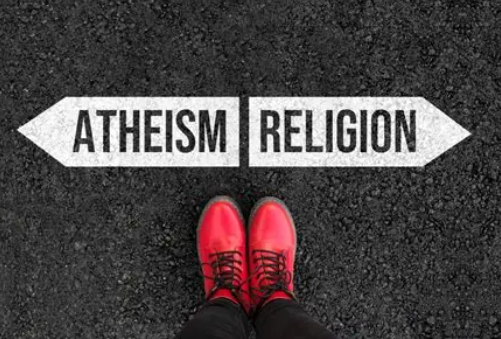
Have you ever been in a conversation with an atheist and found yourself stumbling for words? Perhaps someone challenged you with “There’s no evidence for God” or “Religion has caused more wars than anything else” — and you stood there, heart racing, unsure how to respond without sounding defensive or ill-informed.
You are not alone. Many Christians feel underprepared for these conversations, not because their faith is weak, but because they have never been equipped with the tools of Christian apologetics — the reasoned defense of the Christian faith.
This guide is not about “winning” arguments or humiliating anyone. The goal is always love. As 1 Peter 3:15 beautifully instructs us: “But in your hearts revere Christ as Lord. Always be prepared to give an answer to everyone who asks you to give the reason for the hope that you have. But do this with gentleness and respect.” That verse captures it perfectly — reasoned answers, delivered with grace.
Let us walk through the most common atheist arguments and explore how to respond to each one thoughtfully, humbly, and effectively.
Before You Respond: Principles for Every Conversation
Before diving into specific arguments, there are foundational principles that should guide every dialogue you have about faith:
Listen First: Do not be so eager to respond that you fail to truly hear what is being said. Often, what sounds like an intellectual objection is really a personal wound — a painful experience with the church, a loss, or a sense of betrayal.
Ask Questions: Socratic dialogue is powerful. Instead of immediately defending, ask: “That’s an interesting perspective — what led you to that conclusion?” Questions reveal the heart behind the argument.
Pray Before and During: Ask the Holy Spirit to give you wisdom. You are not in that conversation by accident.
Know the Difference: Some people are genuine seekers with real questions. Others are combative and not truly open. Jesus Himself did not cast pearls before swine. Know when to engage deeply and when to speak a simple truth and walk away.
Never Fear the Questions: God is not threatened by doubt or inquiry. A faith that cannot withstand questioning is fragile. The great saints — Augustine, Aquinas, C.S. Lewis — wrestled deeply and came out stronger.
Argument 1: “There Is No Evidence for God”
This is perhaps the most common challenge. It sounds straightforward, but it contains an embedded assumption — that the only valid evidence is the kind found in a laboratory. Let us unpack this carefully.
The Response:
First, ask a clarifying question: “What kind of evidence would you accept?” This is not a deflection — it is an essential question, because the demand is often for scientific, empirical, repeatable evidence. But God, by definition, is not a physical object subject to laboratory testing. Demanding empirical proof for a transcendent being is like demanding a ruler to measure love.
Second, point to the cosmological argument. The universe exists. Everything that begins to exist has a cause. The universe began to exist (as confirmed by the Big Bang). Therefore, the universe had a cause — and that cause must be outside of time, space, and matter. That sounds remarkably like what theologians have always called God.
Third, consider the fine-tuning of the universe. Physicists like Paul Davies and Stephen Hawking have acknowledged that the fundamental constants of nature — gravity, the speed of light, the mass of electrons — are calibrated with extraordinary precision to allow life to exist. The probability of this happening by chance is astronomically small. This is called the anthropic fine-tuning argument and it is deeply compelling.
Fourth, mention the argument from consciousness. Science can explain brain chemistry, neural pathways, and synaptic firing — but it cannot explain why any of it feels like something. The subjective experience of consciousness — what philosophers call “qualia” — has no satisfactory materialist explanation. Many scholars argue this points powerfully toward a non-material dimension of reality.
Finally, appeal to personal experience — not as the only evidence, but as valid testimony. Hundreds of millions of people across history and cultures have encountered God in ways that transformed their lives. Mass hallucination does not explain the consistency of this testimony across time, geography, and culture.
“The very fact that we ask the question ‘Does God exist?’ assumes we have a concept of something that might exist beyond the material world. Where did that concept come from in a purely materialist universe?” — a question worth sitting with.
Argument 2: “Science Has Disproven Religion”
This argument assumes that science and faith are locked in mortal combat. But the historical reality is far more nuanced — and fascinating.
The Response:
Begin by pointing out that science was largely born in the womb of Christianity. The founders of modern science — Copernicus, Galileo, Kepler, Newton, Faraday, Mendel, Pasteur — were men of deep faith. They believed that because the universe was created by a rational God, it would operate according to rational, discoverable laws. Their faith motivated their scientific inquiry.
Science and Christianity answer different kinds of questions. Science asks “How?” — how does the world work, how did species develop, how does the brain function? Christianity asks “Why?” — why is there something rather than nothing, why does life have meaning, why should we be moral? Asking science to answer theological questions is like asking a mechanic to explain why you are driving to a particular destination.
Evolution, specifically, deserves mention since it is often brought up here. Many devout Christians — including Francis Collins, former director of the National Institutes of Health and one of the world’s leading scientists — accept evolutionary biology and find no conflict with their faith. The question of how God created is separate from the question of whether He created.
Also note that science itself cannot answer its own foundational questions. Why should we trust logic? Why should we believe our cognitive faculties give us truth? Why does mathematics describe physical reality so perfectly? These questions point beyond the scientific method itself.
“The more I study science, the more I believe in God.” — Albert Einstein (paraphrased from multiple writings)
Argument 3: “Religion Has Caused Most of the World’s Wars”
This is an emotionally charged argument that carries some historical weight but is significantly overstated. It deserves both honest acknowledgment and correction.
The Response:
First, be honest. Yes, terrible things have been done in the name of religion, including the Crusades, the Inquisition, and religious sectarian violence. Do not minimize these. Acknowledge them with sorrow. But also distinguish between what Christianity teaches and what has been done by people claiming to be Christian. The actions of fallen, sometimes corrupt, sometimes politically motivated institutions do not define the essence of the faith.
Second, correct the historical record. Scholar William Cavanaugh and others have documented that most conflicts labeled “religious” were fundamentally political, territorial, or ethnic in nature — with religious justification added later. The Thirty Years War, for example, was largely a political conflict between European powers. The Rwandan genocide was carried out by people who were predominantly Christian — but it was rooted in ethnic hatred, not theology.
Third — and this is powerful — point to what happens when God is removed from society. The most violent regimes in human history were explicitly atheistic: Stalin’s Soviet Union (estimated 20 million dead), Mao’s China (estimated 45-65 million dead), Pol Pot’s Cambodia. Atheism as a state ideology does not produce peace — it produces some of the greatest bloodshed the world has ever seen.
Fourth, point to what Christianity has actually produced: the abolition of slavery (Wilberforce was driven by his Christian faith), the founding of hospitals, universities, and orphanages, the civil rights movement (led by Rev. Dr. Martin Luther King Jr.), and the hundreds of thousands of Christian relief organizations serving the poorest people on earth today.
“I have decided to stick with love. Hate is too great a burden to bear.” — Rev. Dr. Martin Luther King Jr.
Argument 4: “If God Exists, Why Is There So Much Suffering?”
The problem of evil and suffering is perhaps the most emotionally powerful challenge to Christian faith. It is not just an intellectual argument — for many people, it is a deeply personal wound. Handle it with immense tenderness.
The Response:
First, do not rush to answers. If someone is in pain, sit with them in it first. Job’s friends made the mistake of offering explanations too quickly. Sometimes the most Christlike response is simply: “I am so sorry. This breaks my heart too.”
Second, make the philosophical distinction between the logical problem of evil and the emotional problem of evil. The logical problem asks: “Can an all-powerful, all-knowing, all-good God and evil both exist?” Most philosophers — including many atheists — now concede that these are logically compatible. God may have morally sufficient reasons for permitting evil even if we do not fully understand them.
The emotional problem is different: “Even if God exists, I am angry at Him for allowing this.” This is a deeply human response — and one God can handle. The entire book of Lamentations and many of the Psalms are raw expressions of anguish directed at God. He is not offended by our honest grief.
Third, point to free will. Much suffering in the world flows directly from human choices — war, cruelty, abuse, neglect. A world without human freedom would be a world without love, because love cannot be coerced. God chose to create beings capable of love, which required beings capable of choice — and with choice comes the possibility of terrible misuse.
Fourth, consider the Christian answer to suffering uniquely: God did not stand at a distance from human pain. He entered it. Jesus Christ was beaten, humiliated, abandoned, and killed. There is no religion in the world where the supreme being suffers alongside humanity. The cross does not explain suffering — but it transforms its meaning. God is not absent from our pain; He has been there.
Fifth, point to transformation. The most compassionate people in the world are often those who have suffered most deeply. Pain, when met with faith, can produce extraordinary character, empathy, and purpose. This does not make suffering good in itself — but it means God can bring redemption even out of the worst of it.
“God whispers to us in our pleasures, speaks in our conscience, but shouts in our pain: it is His megaphone to rouse a deaf world.” — C.S. Lewis, The Problem of Pain
Argument 5: “The Bible Is Full of Contradictions and Was Written by Men”
This argument often comes from people who have heard this claim repeated but may not have examined it carefully. Engage it with confidence and intellectual honesty.
The Response:
First, ask them to name a specific contradiction. Many people make this claim in the abstract but have never actually studied the text. When they name a specific passage, you can address it directly. Most alleged contradictions, upon careful examination, dissolve into matters of translation, literary genre, historical context, or narrative perspective.
Second, acknowledge that the Bible was indeed written by human beings — approximately 40 different authors over roughly 1,500 years. But Christians believe it was written by human beings inspired by God. This is called the doctrine of inspiration. Just as a composer can guide a musician to produce a specific piece of music, God guided human authors while still expressing their individual personalities, styles, and perspectives.
Third, address the historical reliability of the Bible. The New Testament documents are among the best-attested ancient texts in existence. We have over 5,800 Greek manuscripts of the New Testament — vastly more than for any other ancient work. Julius Caesar’s Gallic Wars, by comparison, survives in about 10 manuscripts. The textual integrity of Scripture is remarkable by any historical standard.
Fourth, note the archaeological confirmation. Hundreds of details in Scripture — cities, rulers, customs, geographical features — have been confirmed by archaeology. The existence of Pontius Pilate, once doubted by some scholars, was confirmed by a stone inscription found in Caesarea Maritima in 1961. Cities like Jericho, Nineveh, and the Pool of Siloam have all been confirmed archaeologically.
Fifth, point to the internal coherence. Despite being written by 40 authors across 15 centuries, on three continents, in three languages, about hundreds of topics — the Bible maintains a remarkable thematic unity. The story of creation, fall, redemption, and restoration flows consistently from Genesis to Revelation. This coherence is itself extraordinary.
Argument 6: “Christians Only Believe Because They Were Raised That Way”
This is known as the genetic fallacy — judging the truth of a belief by its origin rather than its merits. But it deserves a thoughtful response.
The Response:
First, point out the logical flaw: where a belief comes from does not determine whether it is true. Scientists who were raised to trust empirical reasoning are not therefore wrong to trust it. The origin of a belief is irrelevant to its truth value.
Second, note that the same argument applies to atheism. Many atheists arrived at their position through upbringing, cultural influence, or specific experiences. Does that mean atheism is false? Of course not. The argument proves too much.
Third — and this is powerful — point to the vast number of people who came to Christianity from outside it. Rosaria Butterfield was a tenured professor and self-described “left-wing, lesbian activist” before becoming a Christian. Antony Flew was one of the world’s most famous atheist philosophers before concluding, late in life, that the evidence pointed toward a designer. Lee Strobel was an award-winning journalist and committed atheist who set out to disprove Christianity and ended up becoming a believer after his research. These are not people who were raised into faith.
Fourth, invite genuine inquiry. If someone has never truly examined Christianity — its historical claims, its philosophy, its evidence — then their rejection of it is not based on investigation but on assumption. Invite them to read C.S. Lewis’s Mere Christianity or Lee Strobel’s The Case for Christ and engage with the actual arguments.
Argument 7: “Morality Doesn’t Require God”
This is actually one of the more sophisticated arguments, and it deserves to be taken seriously. Many atheists live deeply moral lives. But the argument about whether morality needs God as its foundation is different from whether atheists can be moral.
The Response:
First, distinguish between the ability to behave morally and the ability to ground morality philosophically. Most atheists are perfectly capable of acting morally. But can atheism provide a rational basis for why anything is objectively right or wrong — not just “I prefer this” or “my culture says this” — but truly, universally, obligatorily wrong?
Second, raise the challenge of moral realism without God. If there is no God, then morality must be either: (1) subjective — just personal preference, like preferring chocolate to vanilla; (2) evolutionary — instincts that helped our species survive; or (3) socially constructed — agreements that vary by culture and time. But none of these positions actually explains why we should say that the Holocaust was objectively, really, truly wrong — not just that we dislike it. Without a transcendent moral lawgiver, moral statements reduce to expressions of preference.
Third, make the moral argument for God. The very fact that we recognize universal moral obligations — those torturing children for fun is wrong regardless of what any culture says — points to a moral order that transcends human opinion. Where does that moral order come from? Christians argue it flows from the character of a morally perfect God.
Fourth, invite them to live consistently. If morality is purely evolutionary, then altruism — helping strangers at personal cost — makes no evolutionary sense. If morality is purely cultural, then abolitionists were not more moral than slaveholders, just different. Most people, when pressed, recognize that some things really are wrong and some things really are right — and that recognition points toward objective moral truth.
Final Thoughts: The Heart Behind the Argument
Every objection to Christianity is ultimately a person standing behind it. And that person is made in the image of God, deeply loved, and being pursued by a Father who leaves the ninety-nine to find the one.
Apologetics is a tool, not a weapon. It is not about scoring points in a debate — it is about removing intellectual obstacles that stand between a searching soul and the living God. Your job is to be faithful, not to be persuasive. You plant and water; God gives the growth.
Some conversations will end in frustration. Some will end with a question lingering in someone’s mind long after you have parted ways — and that question may be exactly what God uses to draw them home. Trust the process. Trust the Spirit. Show up with knowledge in your mind, grace in your words, and love in your heart — and leave the rest to God.
The greatest argument for Christianity has always been and will always be a Christian who is genuinely, visibly, mysteriously transformed by knowing Jesus Christ. Be that argument. Live it. And when someone asks you the reason for the hope within you, be ready — gently, respectfully, and with great love — to tell them.
Recommended Reading for Further Study
- Mere Christianity — C.S. Lewis
- The Case for Christ — Lee Strobel
- The Reason for God — Timothy Keller
- God Is Not Great: A Response — Various Christian apologists
- Cold-Case Christianity — J. Warner Wallace
- On Guard — William Lane Craig
- Gunning for God — John Lennox
“Always be prepared to give an answer to everyone who asks you to give the reason for the hope that you have.”
— 1 Peter 3:15