Repentance is one of the most profound, misunderstood, and underestimated gifts that God has extended to humanity. In a world saturated with surface-level religion and emotional performances, the deep, soul-stirring work of true repentance has become a rare treasure. Many who call themselves believers have confused momentary regret with genuine repentance, sorrow over consequences with sorrow over sin itself, and the desire to escape punishment with the longing to be reconciled to a holy God.
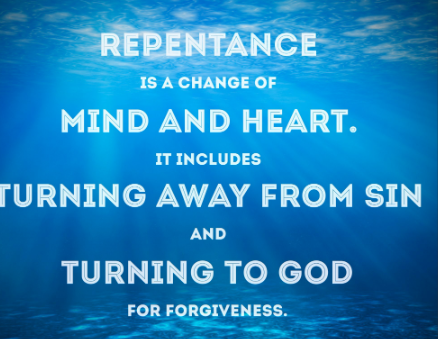
True repentance is not a one-time emotional event triggered by a powerful sermon or a brush with catastrophe. It is a complete turning — a metanoia, as the Greek word in the New Testament describes — a total change of mind, heart, will, and direction. It is the moment when a person, confronted with the holiness of God and the weight of their own sin, ceases to defend themselves and fully surrenders to the mercy and lordship of Jesus Christ.
The Bible paints a vivid portrait of what genuine repentance looks like. It is seen in David’s shattered cry in Psalm 51, where he begs God not merely to remove punishment but to create in him a clean heart. It is visible in the prodigal son, who did not return home to negotiate terms but to confess unworthiness and receive whatever grace his father would offer. It is embodied in Zacchaeus, who did not just feel bad about his corruption but immediately moved to make restitution.
True repentance has several distinguishing marks. First, it involves genuine conviction — a Spirit-worked recognition that sin is not merely a mistake or a social failure but an offense against the infinite holiness of God. Second, it involves godly sorrow, described in 2 Corinthians 7:10 as a sorrow that leads to salvation rather than death. Third, it involves confession — honest, specific acknowledgment of wrongdoing without excuses. Fourth, it involves forsaking — the deliberate turning away from sin, not merely wishing it were otherwise. And fifth, it bears fruit — changed behavior, restored relationships, and a renewed hunger for righteousness.
This article is an invitation — not to the religion of guilt and shame, but to the liberating grace of genuine transformation. As you read the prayers, meditate on the scriptures, and follow the reflections offered here, may your heart be broken open in the most beautiful way, and may you discover what countless saints have found: that the God who calls us to repentance is the same God who runs to meet us the moment we turn toward home.
10 Powerful Bible Verses on True Repentance
The Word of God is the anchor of repentance. These ten scriptures illuminate its nature, necessity, and the breathtaking grace that awaits those who return to God with their whole heart.
- Acts 3:19 — The Call to Turn
“Repent, then, and turn to God, so that your sins may be wiped out, that times of refreshing may come from the Lord.” — Acts 3:19
This verse captures the double motion of biblical repentance: turning away from sin and turning toward God. The Apostle Peter, preaching after healing a lame man at the temple gate, connects repentance with two stunning promises. First, sins are not merely forgiven — they are wiped out, erased completely from the divine record. Second, God sends “times of refreshing,” a phrase that evokes the image of cool water reaching a parched soul. Repentance, Peter makes clear, is not a punishment God imposes on the guilty. It is a doorway He opens to those who are weary, heavy-laden, and desperate for renewal. The imperative is urgent and the reward is immediate.
- 2 Chronicles 7:14 — Humility and Healing
“If my people, who are called by my name, will humble themselves and pray and seek my face and turn from their wicked ways, then I will hear from heaven, and I will forgive their sin and will heal their land.” — 2 Chronicles 7:14
God’s response to Solomon’s dedication of the temple contains one of Scripture’s most comprehensive repentance formulas. Four actions are required: humbling oneself, praying, seeking God’s face, and turning from wickedness. Notice what God does not say — He does not demand perfection as a prerequisite. He demands sincerity. Humility acknowledges dependence. Prayer is the posture of surrender. Seeking His face means pursuing His presence above all else. Turning from wickedness is the behavioral evidence of true change. When these four conditions are met, God promises three responses: He will hear, He will forgive, and He will heal. This is a covenant promise. It was given to a nation, but its principle applies to every individual soul willing to meet God on His terms.
- Psalm 51:10 — The Cry for a New Heart
“Create in me a pure heart, O God, and renew a steadfast spirit within me.” — Psalm 51:10
Written by David after Nathan the prophet confronted him about his sin with Bathsheba and the murder of Uriah, Psalm 51 stands as the most intimate repentance prayer in all of Scripture. David does not ask for a better performance. He asks for a new heart. The Hebrew word for “create” here — bara — is the same word used in Genesis 1:1 for God creating the universe. David is acknowledging that genuine change requires divine creation, not human effort. No amount of willpower, religious discipline, or moral resolution can produce a pure heart. Only God can do that work. This verse teaches us that true repentance looks upward before it looks inward, trusting God’s power to transform what human effort cannot reach.
- Isaiah 55:7 — Radical Return
“Let the wicked forsake their ways and the unrighteous their thoughts. Let them turn to the Lord, and he will have mercy on them, and to our God, for he will freely pardon.” — Isaiah 55:7
Isaiah’s invitation is remarkable for its radical reach — it extends even to the wicked and the unrighteous. No one is excluded from the possibility of return. The verse demands two specific actions: forsaking wicked ways and forsaking unrighteous thoughts. This is significant. Biblical repentance is not only about external behavior; it penetrates the life of the mind. Sinful thought patterns, habitual fantasies, bitterness rehearsed in silence — all of these must be surrendered. But the response God promises is equally radical. He will “freely pardon” — a phrase that suggests lavish, unconditional forgiveness. This is not a grudging amnesty. It is the extravagant pardon of a God whose mercy is as vast as His holiness is pure.
- Luke 15:18-19 — The Prodigal’s Confession
“I will set out and go back to my father and say to him: Father, I have sinned against heaven and against you. I am no longer worthy to be called your son.” — Luke 15:18-19
The parable of the prodigal son is Jesus’ most vivid illustration of repentance and grace. In these verses, the son’s awakening is portrayed in stages: first, he “comes to himself” — a moment of devastating clarity about his condition. Then he forms a resolve. Then he composes a confession. Notice the structure of his intended speech: he acknowledges sinning against heaven first, then against his father. True repentance always recognizes that sin is primarily vertical before it is horizontal. He also surrenders his entitlement, offering to be received as a hired servant rather than a son. This posture of complete unworthiness, without bargaining or self-justification, is the hallmark of genuine brokenness. And the father, seeing him while he is still a great way off, runs to him.
- 1 John 1:9 — The Promise of Cleansing
“If we confess our sins, he is faithful and just to forgive us our sins and to purify us from all unrighteousness.” — 1 John 1:9
Few verses have brought more comfort to the repentant soul than this one. John writes to believers — people already in relationship with God — affirming that ongoing confession is both necessary and effective. The condition is confession: honest, specific, humble acknowledgment of sin. The response is twofold: forgiveness and purification. Forgiveness addresses the legal dimension of sin — the debt is cancelled. Purification addresses the moral dimension — the stain is removed. And the basis for both is not human effort or merit but God’s own faithfulness and justice. It is just for God to forgive because Christ has already paid the penalty in full. Confession, then, is not earning God’s mercy — it is receiving what has already been purchased at infinite cost.
- 2 Corinthians 7:10 — Godly Sorrow vs. Worldly Sorrow
“Godly sorrow brings repentance that leads to salvation and leaves no regret, but worldly sorrow brings death.” — 2 Corinthians 7:10
Paul draws a crucial distinction that every person seeking genuine repentance must understand. Worldly sorrow is grief over consequences — the regret of being caught, of losing reputation, of suffering discomfort. It looks inward, focuses on the self, and ultimately leads to despair or hardness. Godly sorrow, by contrast, is grief over sin itself — grief because God has been offended, because a holy relationship has been damaged, because the very thing one loved has wounded the One who is most worthy of love. This sorrow leads outward and upward — toward God, toward reconciliation, toward change. It produces the “fruit” that Paul lists in verse 11: earnestness, eagerness to clear oneself, indignation at sin, fear, longing, zeal. Worldly sorrow is about consequences. Godly sorrow is about character.
- Ezekiel 18:30-31 — A New Heart and a New Spirit
“Repent! Turn away from all your offenses; then sin will not be your downfall. Rid yourselves of all the offenses you have committed, and get a new heart and a new spirit.” — Ezekiel 18:30-31
God’s call through Ezekiel is both commanding and compassionate. The prophet addresses a people who had been arguing that they were suffering for the sins of their ancestors, not their own. God will not accept this evasion. Each person is accountable before Him. But the command is not merely behavioral — it reaches for transformation at the deepest level: a new heart and a new spirit. This anticipates the new covenant promise of Ezekiel 36:26, where God promises to give the very heart He is here commanding people to acquire. This is the breathtaking paradox of grace: God commands what only He can supply. He calls us to repent, and in the very act of our turning, He meets us with the transformative power to become what He has called us to be. Repentance is never a solo act.
- Romans 2:4 — The Kindness That Leads to Repentance
“Or do you show contempt for the riches of his kindness, forbearance and patience, not realizing that God’s kindness is intended to lead you to repentance?” — Romans 2:4
This verse overturns a common misconception: that it is primarily fear of judgment that drives repentance. Paul argues that it is actually God’s kindness — His extraordinary patience, His deliberate forbearance, His refusal to give us what we deserve — that is designed to lead us to repentance. Every day of life is a day of grace. Every moment of health, every relationship sustained, every opportunity to hear the gospel again is an expression of God’s patient mercy, calling us back to Himself. To presume on this kindness — to take it for granted, to interpret God’s silence as approval — is to show contempt for the very riches that are reaching out to save us. Let this truth awaken wonder: God has been kind to you not because you deserve it, but because He is pursuing you.
- Revelation 3:19 — Discipline as Love
“Those whom I love I rebuke and discipline. So be earnest and repent.” — Revelation 3:19
Jesus speaks these words to the lukewarm church of Laodicea — a congregation so comfortable with worldly prosperity that it had lost all awareness of its spiritual poverty. The command to repent is urgent: “be earnest” carries the sense of zealous, immediate action. But what makes this verse extraordinary is the context in which the command is given: “Those whom I love.” Repentance is not the condition for being loved by God — it is the response to being loved by Him. Discipline is not rejection; it is the sign of a relationship so precious to God that He will not allow complacency to destroy it. For the Laodiceans, and for us, Christ stands at the door and knocks. Repentance is the act of opening the door — not to earn His presence, but to receive it.
A Powerful Prayer for True Repentance
Pray this with a sincere and open heart. Do not rush. Let each section breathe.
Heavenly Father, I come before You not with eloquence or confidence in my own righteousness, but broken, humbled, and undone by the awareness of who You are and who I have been. I come not because I have earned the right to approach You, but because You have made a way through the blood of Your Son, Jesus Christ, and in His name I dare to draw near to Your throne of grace.
Lord, I have sinned against You. Not merely in action, but in thought, in attitude, in the secret desires of my heart that I have guarded jealously from Your light. I have chosen myself over You, again and again. I have placed the opinions of others above Your truth. I have pursued comfort when You called me to holiness. I have harbored bitterness when You called me to forgiveness. I have been proud when You called me to humility. And I have, in many seasons, treated Your grace as a license rather than a gift. For all of this, I am deeply, genuinely sorry — not merely because of the consequences I have faced, but because I have grieved You, the God who is worthy of all love, all obedience, and all devotion.
Today, I renounce every defense. I lay down every excuse. I will not blame my circumstances, my upbringing, my wounds, or the failures of others, though they were real. I stand before You accountable for every choice I have made, and I confess that I have fallen short of Your glory and Your standard for my life. Your Word says that if I confess my sins, You are faithful and just to forgive me and to cleanse me from all unrighteousness. I am claiming that promise now, not because I deserve it, but because You have promised it, and You cannot lie.
Father, I ask You to search me — to go where I am afraid to go myself. Search every dark room in my heart. Search the old wounds I have sealed shut. Search the sins I have minimized because I have committed them so long that they have begun to feel ordinary. Search the pride I dress up as confidence, the fear I dress up as wisdom, the selfishness I dress up as self-care. Bring it all into Your light. Not to humiliate me, but to heal me. I surrender even those parts of myself that I do not yet fully understand to Your holy, searching gaze.
Lord Jesus, I believe that You went to the cross carrying the full weight of everything I have just confessed and everything I have not yet had the courage to name. You bore my guilt, my shame, my moral failure, and the record of my rebellion — and You nailed it there, finished and done. I receive that sacrifice now, not as theology only, but as my personal, life-giving truth. I am forgiven. I am washed. I am received.
Holy Spirit, I invite You now to do what only You can do. Do not let this prayer be merely an emotional moment that fades by morning. Seal this repentance deep into my character. Create in me a clean heart, as David prayed — not patched, not renovated, but created anew. Give me a genuine hatred of sin — not a performance of holiness, but a real, internal revulsion against what separates me from You. Give me a hunger for righteousness that is stronger than my old hungers. Give me the courage to make right what I have made wrong, to seek forgiveness from those I have hurt, and to walk in the light even when darkness feels more familiar.
Father, where I have hurt others, give me the grace to go to them and confess my wrong without demanding anything in return. Where I have stolen — in trust, in honesty, in love — make me a restorer. Where I have spoken words that wounded, let my future words bring healing. Let repentance in me not be a private transaction but a visible transformation.
And Lord — thank You. Thank You for Your patience with me. Thank You for every time You kept the door open when I deserved to find it shut. Thank You for the wounds of discipline that were always the hands of love reaching for me. Thank You that You are a God who runs toward the returning sinner, not away. Thank You that Your mercies are new every morning and that this morning is not too late.
I give You my whole life today — not the performance of a life devoted to You, but the real thing, messy and uncertain and completely dependent on Your grace. I choose You over my sin. I choose Your will over my own comfort. I choose Your kingdom above everything else this world has offered me.
In the matchless, all-sufficient, all-powerful name of Jesus Christ, Amen.
After the Prayer: A Conclusion and Call to Walk in Repentance
True repentance does not end when the prayer ends. It begins there. What you have just prayed — if you prayed it with sincerity — is not a transaction that resolves your relationship with God in a moment and returns you to life unchanged. It is the opening of a door. On the other side of that door is a journey, and that journey is called discipleship.
The first thing to understand is that you will not do this perfectly. Repentance is not a one-time event but a lifelong posture. Martin Luther, in the very first of his Ninety-Five Theses, wrote that when our Lord Jesus Christ said “repent,” he willed the entire life of believers to be one of repentance. This is not discouraging — it is liberating. It means you are not required to have it all figured out before coming to God. You are only required to keep coming, keep turning, keep surrendering whatever new layer of resistance the Spirit reveals.
The second thing to understand is that genuine repentance will bear visible fruit. Jesus said in Matthew 3:8, “Produce fruit in keeping with repentance.” This fruit is not achieved by straining harder but by staying connected to the source of transformation. It looks like a relationship that begins to heal. A habit that slowly loses its grip. A generosity that was not there before. A gentleness where there was once harshness. A quiet joy that replaces the restless striving of a life lived for self. These are not the grounds of your acceptance — they are the evidence of your transformation.
The third thing to understand is that you do not walk this road alone. The Church — imperfect, human, sometimes painful — is nonetheless God’s chosen community of transformation. Find people who will pray with you, who will ask hard questions, who will celebrate the small victories and hold space for the moments of failure without condemnation. Repentance flourishes in community and withers in isolation.
And finally, let this truth anchor everything: the God to whom you have just returned is not waiting with a ledger, tallying how well you perform in the days ahead. He is the Father who ran down the road to meet His returning son. He is the Shepherd who left the ninety-nine to find the one that was lost. He is the God who said, through His prophet, “I have loved you with an everlasting love; I have drawn you with unfailing kindness.” Your repentance did not purchase that love — it simply brought you back into the experience of it.
Walk in the freedom of the forgiven. And if tomorrow you stumble — return. The door is still open. The Father is still watching the road. And His arms are always wide.
For Personal Reflection and Group Study
Questions to Deepen Your Repentance
- What is the difference between feeling sorry about consequences and feeling sorry about sin itself? Have you experienced both? What did each feel like?
- Which of the ten scriptures in this article spoke most powerfully to your current situation? Why?
- Is there a specific person you need to approach in order to make repentance concrete and visible? What is holding you back?
- What “fruit” of repentance would you expect to see in your life over the next 30 days if this repentance is genuine?
- How might you structure a daily habit of confession and renewal to sustain what you have begun today?
A Final Word
This article was written for the one who is tired — tired of performing, tired of the distance between who they are and who they long to be, tired of carrying the weight of unresolved guilt. True repentance is the moment that weight lifts. Not because you found the strength to put it down, but because the One who carries every burden came and took it from you.
You are not too far gone. You have not sinned too much. You have not wasted too many years. The God of every second chance is calling you — not after you have cleaned yourself up, but right now, exactly as you are, exactly where you are. Come home.
“Return to me, and I will return to you, says the Lord Almighty.” — Malachi 3:7